


21 May Building Energy-Efficient Custom Homes for Texas Homeowners
Energy Efficient Custom Home Texas: Smart Building Decisions for Long Term Comfort
Building an energy efficient custom home Texas homeowners can depend on starts with the right decisions early in the design process. In Center Point, TX, insulation, windows, and HVAC planning directly affect comfort, utility costs, and long term performance. Texas Highlands Custom Homes & Remodel is licensed and insured and helps homeowners build smarter from the ground up.
Why an Energy Efficient Custom Home Texas Homeowners Build Matters
A custom home should stay comfortable during hot summers, changing temperatures, and heavy humidity without driving up energy bills. Many homeowners focus on finishes first, but the biggest performance gains usually come from the building envelope and mechanical systems.
Proper insulation, quality windows, and accurate HVAC sizing work together. When one area is overlooked, the entire system becomes less efficient. That can lead to uneven temperatures, higher operating costs, and unnecessary strain on equipment.
Homeowners building in the Hill Country also want durability. Energy efficient materials can help reduce moisture issues, improve indoor comfort, and extend the lifespan of the home.
For homeowners exploring modern home planning, the team at Texas Highlands Custom Homes & Remodel helps simplify the process from design through construction.
The Process for Energy Efficient New Builds in Center Point
Step 1: Climate Focused Design Planning
The first step is evaluating how the home will perform in the local climate. Window placement, roof design, shade exposure, and insulation strategy all influence energy efficiency.
Spray foam insulation is a common upgrade because it helps seal air leaks while improving temperature control. In many Texas homes, air leakage creates larger efficiency problems than homeowners realize.
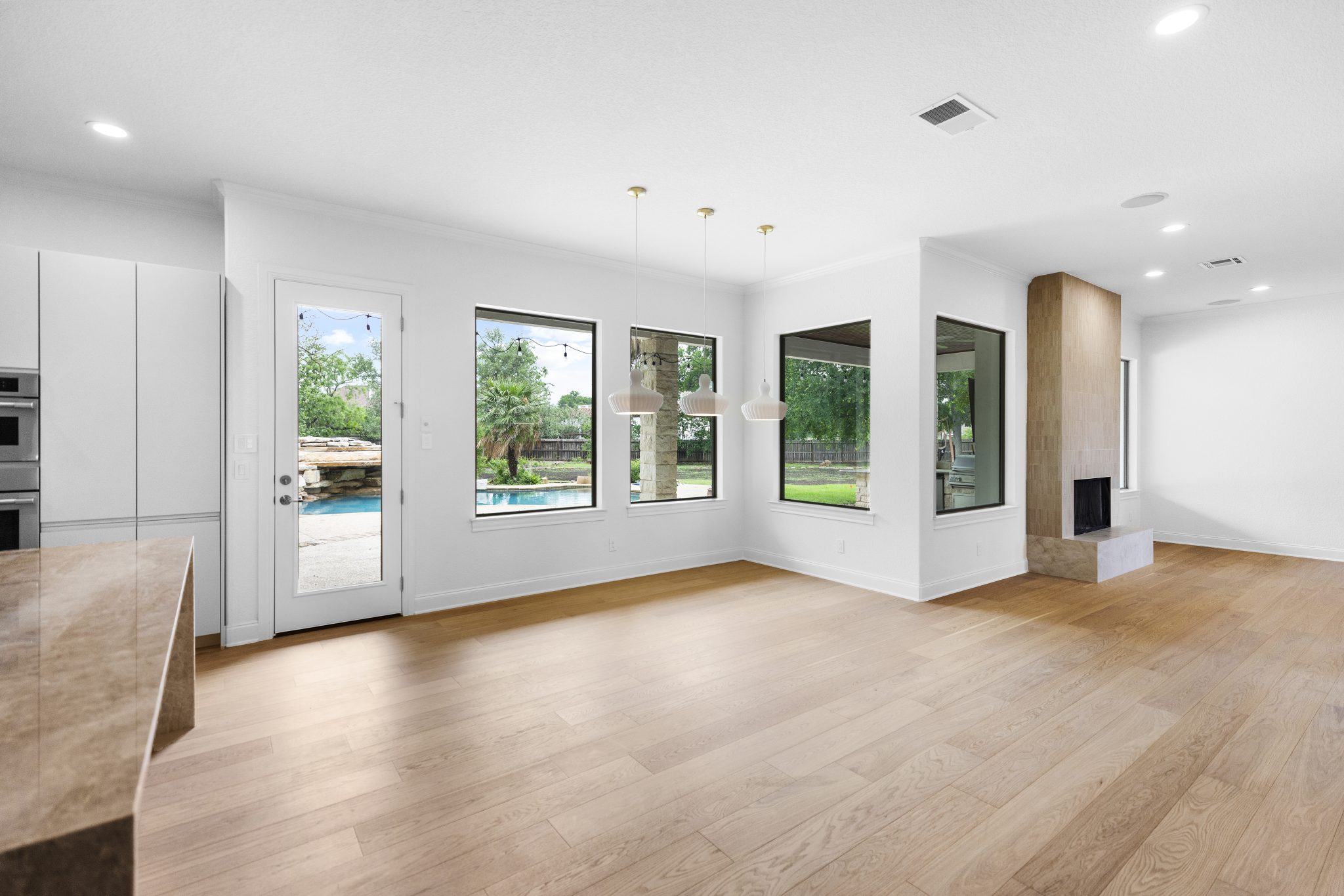
Planning also includes selecting windows with the right window U-factor ratings. Lower U-factor windows can reduce heat transfer and improve indoor comfort throughout the year.
Step 2: Proper HVAC Sizing and Ventilation
HVAC sizing is another major factor. Bigger systems are not always better. Oversized equipment may cycle too quickly, creating humidity and comfort issues.
A properly designed system should match the home’s square footage, insulation levels, and window performance. Accurate HVAC sizing helps improve airflow, maintain consistent temperatures, and reduce energy waste.
Builders should also coordinate duct placement and ventilation during framing. Small adjustments during construction can significantly improve long term efficiency.
Step 3: Final Sealing and Performance Testing
The final stage focuses on sealing and testing the home before completion. This includes verifying insulation coverage, checking window installation, and ensuring mechanical systems operate correctly.
Many homeowners also add energy conscious features like smart thermostats, efficient lighting, and upgraded ventilation systems. These improvements support overall comfort without changing the design style of the home.
Homeowners looking for design and build guidance can learn more through the custom home planning resources available at Texas Highlands Custom Homes & Remodel.
Local Building Considerations in Center Point
Center Point properties often involve unique site conditions, including sloped lots, rocky soil, and rural utility access. Proper planning during site preparation helps prevent delays and supports long term structural performance.
Permitting requirements and building regulations may also vary depending on the project location. Homeowners can review regional construction information through Kerr County Official Permitting Resources before beginning construction.
Drainage planning also matters in the Hill Country. Managing runoff correctly protects the foundation and helps preserve landscaping around the home.
Cost Drivers That Affect Energy Efficiency
Several factors influence the cost of building an energy efficient home in Texas. Higher performance windows, upgraded insulation systems, and advanced HVAC equipment all affect the overall budget.
However, many homeowners view these upgrades as long term investments rather than short term expenses. Better efficiency can help reduce utility costs and improve resale value over time.
Home design complexity also impacts construction costs. Large glass areas, vaulted ceilings, and custom layouts may require additional engineering and energy planning.
Working with an experienced builder early in the process helps homeowners prioritize upgrades that deliver measurable value.
Pair Energy Efficiency With Related Home Services
Energy efficient construction works best when every stage of the project is coordinated properly. Site preparation, framing, and finish selections all contribute to the final performance of the home.
Homeowners planning a new build can explore additional residential construction services through Texas Highlands Custom Homes & Remodel Residential Building Solutions.
For homeowners considering remodeling alongside new construction ideas, the remodeling and renovation guidance available at Texas Highlands Custom Homes & Remodel can help identify opportunities for improved efficiency.
Project planning and scheduling also become easier when working with a single experienced contractor from start to finish. Learn more about the company approach through Texas Highlands Custom Homes & Remodel Home Building Expertise.
Safety, Licensing, and Professional Oversight
Building a high performance home requires careful coordination between contractors, suppliers, and inspectors. Proper installation matters just as much as the materials themselves.
Texas Highlands Custom Homes & Remodel is licensed and insured and follows professional construction practices throughout each phase of the project. Clear communication and organized project management help homeowners stay informed during construction.
Cleanup and site safety also remain important throughout the build. Keeping the project organized protects materials, improves workflow, and supports a smoother construction process.
Frequently Asked Questions
What makes an energy efficient custom home Texas homeowners build different from a standard home?
Energy efficient homes are designed to reduce energy loss and improve comfort. That usually includes better insulation, improved windows, and more accurate HVAC sizing compared to standard construction practices.
Is spray foam insulation worth it in Center Point, TX?
Spray foam insulation can perform very well in Texas climates because it helps reduce air leakage and improve indoor temperature control. Many homeowners choose it for improved efficiency and long term comfort.
Why does window U-factor matter in a custom home?
Window U-factor measures how much heat transfers through a window. Lower U-factor windows can help maintain indoor temperatures and reduce the workload on HVAC systems.
How important is HVAC sizing in a new custom home?
Proper HVAC sizing is critical for comfort and efficiency. Oversized or undersized systems can create uneven temperatures, humidity issues, and unnecessary energy use.
Can energy efficient upgrades increase home value in Center Point?
Many buyers appreciate lower operating costs and improved comfort features. Energy efficient construction may also improve long term durability and overall market appeal.
Conclusion
Planning an energy efficient custom home Texas homeowners can rely on involves more than selecting attractive finishes. Insulation, windows, and HVAC design all play a major role in comfort, efficiency, and long term value. Working with an experienced builder helps ensure every system works together from the beginning.
Sorry, the comment form is closed at this time.